Smith County Clerk of Court services help residents search public filings, request certified documents, review clerk records, and file legal paperwork through the county filing department. Many people contact the county clerk office for marriage records, probate filings, misdemeanor court records, assumed business names, and official court documents used for legal or personal purposes. The office works closely with county courts and supports daily court administration tasks across Smith County. Public records searches remain one of the most requested services from the legal records office. People often search these records before filing a case, checking court information, or requesting certified copies. The clerk office keeps many county documents organized through an official public filing system.
Smith County Clerk of Court records and filing services support attorneys, residents, businesses, title companies, and researchers searching official county information. The court filing office maintains records tied to civil filings, probate matters, marriage licenses, public notices, and other county documents. Many users visit the official clerk office to request copies of court paperwork or verify legal filings connected to county cases. The county clerk office may provide in-person, mail, or online record request options based on the document type. Public filing systems help organize records for faster searches and court processing. Related sections such as Smith County Court Records, Marriage Records, Criminal Court Records, and Smith County Public Records provide more detailed county record information for users searching specific documents.
How to Search Smith County Clerk Court Records
Smith County Clerk Court records can be searched through the official judicial case lookup portal. This system allows users to search civil, criminal, and other court filings using filters like name, case type, and date range. The online system works as an official case lookup portal for Smith County Court related records.
Official Court Records Portal: https://portal.smith-county.com/Public/Home/Dashboard/26
Open the Official Portal
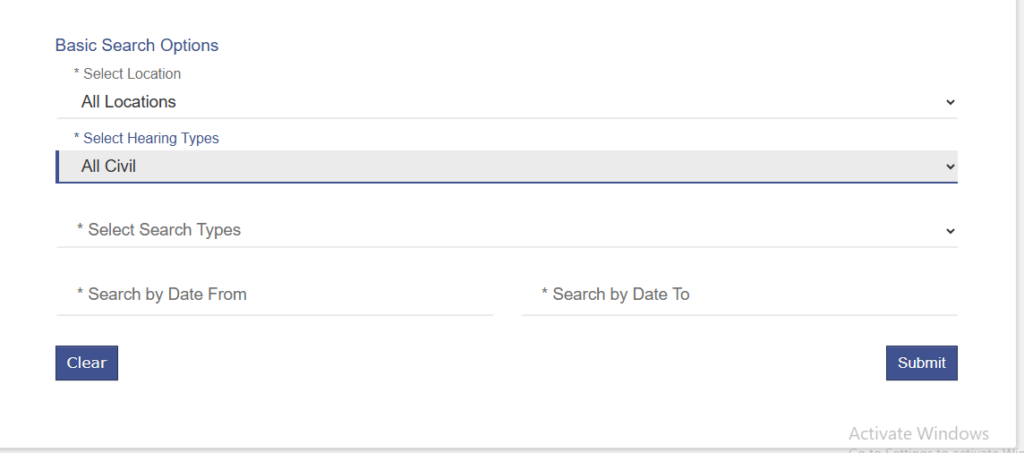
Users should open the Smith County Judicial Search page using the official link above. This page loads the court search tool with filters for civil and other case types.
The system shows:
- Location selector
- Hearing type options
- Search type filters
- Date range fields
Select Case Filters
Before searching, users must select correct filters.
Common options include:
- Location: All Locations or specific court location
- Hearing Type: Civil, Criminal, Probate, etc.
- Search Type: Party name, case number, or filing details
- Date Range: From and To date selection
These filters help narrow results inside the electronic court records system.
Enter Search Information
Users can search by different methods:
- Party name (first or last name)
- Case number
- Filing date range
- Court case category
Name search is common for public users, while case number search gives more precise results.
Run the Search
After selecting filters and entering details, click Submit.
The system will display:
- Case listings
- Case status (open or closed)
- Court type
- Filing information
- Party names
- Hearing details
This works as a full online filing system and case lookup portal.
Review and Use Records
Users can open individual cases to view details. Some records may include court dates, filings, or document references. If a document is not available online, users may need to contact the county clerk office for certified copies or additional court records.
Smith County Clerk Office Services
Smith County Clerk Office provides a wide range of clerk office services related to court records, legal paperwork, and official documentation. The court filing office manages document submissions for civil, criminal misdemeanor, probate, and family-related matters. These clerk office services support public filing system needs, certified document requests, and access to official records. Each submission becomes part of clerk records after review and filing under Texas court procedures. The office also provides filing assistance for required court forms and legal applications.
Court Filing Service
The court filing office in Smith County handles structured legal filings for different case types through standardized case filing services. Civil filings include lawsuits, contract disputes, and property-related claims submitted through court paperwork filing processes. Criminal filings involve misdemeanor case documents and supporting legal records submitted by law enforcement or attorneys. Probate filings cover wills, estate matters, and guardianship records. Family court filings include divorce-related paperwork and custody matters processed under court rules. Filing deadlines must be followed carefully to avoid delays or rejection of legal submissions.
Common filing categories include:
- Civil case filings (lawsuits, disputes, claims)
- Criminal misdemeanor filings
- Probate and estate case filings
- Family-related court filings
- Document submissions with court deadlines
Certified Document Requests
Certified documents are official copies of court records verified by the clerk office with an official seal and signature. Certified record requests are commonly used for legal, immigration, and verification purposes. To request certified copies, individuals must submit case details such as case number, party names, or document type through in-person, mail, or approved online methods. Fees apply per page and for certification services, depending on record type. Processing time varies based on workload, but most requests are completed within a few business days.
Certified document request details:
- Submit request via in-person, mail, or online system
- Provide case number or required record details
- Pay copy and certification fees
- Processing time typically a few business days
- Receive official stamped copies
Court Forms and Applications
Court forms and legal forms are required for filing documents in Smith County court systems. These filing forms include petitions, motions, responses, and administrative court applications used in civil, criminal, probate, and family cases. Judicial paperwork must be completed accurately to meet court requirements before submission to the clerk office. Most forms are available through official court channels or the clerk office public service desk. Properly filled court applications help reduce filing delays and ensure correct entry into official records systems.
Smith County Clerk Records Available to the Public
Smith County clerk records include official documentation from county courts and administrative offices. These records cover public records, court records, and judicial filings created during legal processes. Smith County clerk records include civil, criminal, probate, and marriage documentation. These files reflect court activity, legal filings, and official county reporting. Many records are stored as court case documents and public records used for verification of legal events. Users often review clerk records for case details, filing history, and official court documentation tied to county matters.
Civil Court Records
Civil court records include case files related to disputes between parties in county courts. These records cover lawsuit filings, contract disputes, property claims, and financial disagreements. Each civil case file contains petitions, responses, motions, and final judgments recorded during the case process. Civil court records form part of county judicial records and support tracking of non-criminal disputes. Docket entries, hearing notes, and court orders often appear within these files as part of official reporting through the smith court docket system. Court disputes may involve individuals, businesses, or organizations seeking legal resolution. These civil court records remain part of clerk records maintained at county level. Lawyers, researchers, and case participants often review civil case files to confirm legal filings and follow case progress through recorded updates.
Criminal Court Records
Criminal court records include documentation related to offenses handled through county courts. These files contain arrest filings, misdemeanor records, and felony court records linked to criminal proceedings. Each record may show charges, court appearances, plea information, and sentencing outcomes. Criminal court records form part of official public records kept within the judicial system. Law enforcement reports and court case documents often appear together in these files during case processing. Records track activity from initial filing through final court decision. These criminal court records remain part of clerk records maintained by the county office. They provide a structured record of case history, court actions, and legal outcomes recorded through official channels.
Probate and Estate Records
Probate and estate records cover legal matters tied to wills, inheritance, and property distribution. These probate records include estate filings submitted after death and reviewed through county courts. Each file may contain wills, guardianship records, estate administration papers, and court approvals. Estate filings show how assets move through legal processes during settlement. Probate court records also include petitions, hearings, and final rulings linked to estate matters. These documents form part of judicial records used for legal clarity in property and family transitions. County clerk records store these probate and estate files as official documentation. They remain part of public records connected to estate handling and court-supervised distribution processes.
Marriage and Vital Records
Marriage and vital records include official documentation such as marriage licenses and certified marriage copies. These records show registration details, application forms, and official marriage filings recorded by the county. Marriage records support confirmation of marital status and legal identity documentation. Vital statistics records may also include basic life event filings maintained at county level for administrative reporting. These files often form part of public records used for legal and personal verification. Marriage and vital records remain stored within clerk records as part of county documentation. They provide official proof of marriage events and related legal filings processed through county offices.
Filing Court Documents With the Smith County Clerk
Smith County Clerk processes court document filings for civil, criminal misdemeanor, probate, and other county-level cases. These filings become part of official court records once submitted and accepted by the clerk office. Court document filing includes petitions, motions, responses, and supporting legal papers. Each submission is reviewed for correctness before being added to the case file. The court filing office records every document under a specific case number, making it part of the official judicial record system used in Smith County courts.
Filing Court Documents Process
Court document filing in Smith County follows Texas court procedures that require accurate formatting and complete case details. Every filing is checked by clerk staff before acceptance into the system. Once approved, it receives an official file stamp and becomes part of the court case record. If information is missing or incorrect, the filing may be returned for correction. This process helps maintain accurate legal submissions within public records and ensures each document is properly linked to the correct case file in the county system.
In-Person Filing Process
In-person filing allows individuals to submit court documents directly at the Smith County Clerk office located at the courthouse. This method is used for paper-based submissions, certified documents, and filings that require physical handling. Court staff at the filing counter reviews documents for basic requirements before acceptance. Once processed, the documents are stamped and added to the official case record. This method is often used for urgent filings or when original documents must be submitted in physical form for verification.
- Prepare printed legal documents with correct formatting
- Visit the clerk office during working hours
- Submit filings at the court filing counter
- Pay required filing fees, if applicable
- Receive stamped copies as proof of submission
Online eFiling Options
Smith County supports electronic filing through the Texas eFile system for eligible civil and criminal misdemeanor cases. This system allows users to submit court documents digitally without visiting the courthouse. Filings are uploaded through approved service providers and transmitted to the clerk office for review. Once accepted, the document receives a digital timestamp and becomes part of the official court record. If errors are found, the filing may be rejected and returned for correction before resubmission.
- Upload documents through approved eFile service providers
- Select correct case type and filing category
- Submit petitions, motions, or responses online
- Pay filing fees through secure payment systems
- Receive electronic confirmation after acceptance
Fees, Copy Costs, and Record Request Charges
Smith County Clerk applies standard court costs for filing, copying, and requesting official court records under Texas fee rules. These charges depend on document type, number of pages, and certification requirements. Filing fees apply to court submissions, while copy and certification fees apply when requesting official records. Payment is accepted at the clerk office and through approved payment channels. All charges are tied directly to court case processing and record handling services.
Filing Fees, Copy Costs, and Certification Charges
Court record charges in Smith County follow Texas statutory pricing rules. Filing fees depend on the type of case filed in civil, criminal, or probate court. Copy costs are calculated per page, while certified copies include an extra fee for official verification and court seal. Record search charges may apply when staff must retrieve archived or older files from the system.
Fee Structure Table
| Service Type | Cost | Details |
|---|---|---|
| Standard Copy Fee | $1 per page | Applies to court records and documents |
| Certified Copy Fee | $5 + $1 per page | Includes official court seal and certification |
| Digital/Email Copy (1–15 pages) | $1 per page | Electronic delivery option |
| Digital/Email Copy (16+ pages) | $15 per document | Flat rate for larger files |
| Record Search Fee | Varies | Applied for locating archived records |
These charges apply across civil, criminal, and probate court records managed by the clerk office.
Accepted Payment Methods
Smith County Clerk accepts multiple payment methods for filing and record-related services. Payments can be made at the courthouse or through approved electronic systems where available. Some transactions may include processing charges depending on the payment type. Full payment is required before certified copies are issued or records are released.
Accepted Payment Options
- Cash payments (in-person only)
- Credit cards
- Debit cards
- Money orders
- Cashier’s checks
- Personal checks (with valid identification)
All payments are processed through official county systems and linked to the specific filing or record request.
Smith County Clerk Office Location and Contact Details
Smith County Clerk Office is a government office responsible for court records, filings, and public record services in Smith County, Texas. The court administration office handles civil, criminal misdemeanor, probate, and official public records. Visitors use the public service desk and filing counter for record requests, legal filings, and certified documents. The office operates during standard weekday hours and serves both in-person and mail-based requests for county-level court records and vital statistics.
Main Clerk Office Address
Smith County Clerk main office is located in Tyler, Texas, where most court record services and filing work are processed. The physical office handles civil, criminal misdemeanor, probate, and public records through different divisions on separate floors. Mailing services are also available for record requests sent by post. Parking is available near the courthouse area, with public parking spaces and street parking options depending on availability during office hours.
Main Office Details:
- Physical Address: 200 E. Ferguson, Suite 300, Tyler, TX 75702
- Mailing Address: P.O. Box 2011, Tyler, TX 75710-2011
- Directions: Located in downtown Tyler near the courthouse complex
- Parking: Public parking garages and nearby street parking available
Office Hours and Contact Details
Smith County Clerk Office operates on weekdays and serves the public through walk-in counters, phone support, and official email communication channels. The office handles court filings, record requests, and administrative services through designated departments such as civil, probate, criminal misdemeanor, and vital statistics. Public service desk staff assist visitors with document filing and record searches during business hours. Online services are also available through the official county website for select requests.
Office Information:
- Business Hours: Monday to Friday, 8:00 AM – 5:00 PM
- Phone Number: (903) 590-4670
- Department Contacts: (903) 590-4675 to (903) 590-4697 (division-based lines)
- Email: Available through official contact form on county website
Frequently Asked Questions
Smith County Clerk FAQs help users understand court records, filing services, and record request processes. These answers cover public records, certified copies, electronic filing, and office contact details. The clerk office manages official court records, legal filings, and document requests under Texas court procedures. Below are the most commonly asked questions about clerk office services and court record access.
How do I contact the Smith County Clerk of Court?
Smith County Clerk of Court can be contacted through phone, email form, or by visiting the courthouse office in Tyler, Texas. The office provides support for court records, filings, and certified document requests during business hours. Different departments handle civil, criminal, probate, and vital records inquiries. Walk-in visitors can use the public service desk and filing counter for direct assistance with record-related services.
Can I search court records online?
Yes, some Smith County court records can be searched online through official county systems. Users can view basic case details, docket entries, and filing history for eligible cases. However, sealed or restricted records are not available online. In such cases, users must request records directly from the clerk office. Online systems mainly support civil, misdemeanor, and probate case information where public access is allowed.
How do I request certified copies?
Certified copies can be requested by providing case details such as names, case number, or document type. Requests can be submitted in person, by mail, or through approved online methods. The clerk office issues official copies with a certification seal for legal use. Fees are charged per page along with a certification fee. Processing time usually takes a few business days depending on workload and record availability.
What records are public?
Public records include civil court records, misdemeanor cases, probate filings, and official court documents that are not sealed by the court. These records are part of clerk records maintained under Texas public information laws. Some sensitive records, such as juvenile or sealed cases, are restricted. Access depends on legal classification and court rules governing confidentiality and privacy protections.
Can I file documents electronically?
Yes, eligible cases can be filed electronically through the Texas eFile system used by Smith County Clerk. This system allows submission of legal documents such as petitions, motions, and responses without visiting the courthouse. The clerk office reviews each filing before acceptance into official court records. Electronic filing is commonly used for civil and misdemeanor cases where digital submission is permitted under court rules.