Smith County handles many local legal matters through its magistrate court system, including warrants, misdemeanor charges, bond hearings, and preliminary case reviews. Residents often search court files to check hearing dates, review filing details, or verify public case information. The court supports law enforcement procedures and early-stage criminal matters across the county. Online record systems make case lookup faster for attorneys, reporters, employers, and members of the public seeking current court activity without visiting the courthouse in person.
Smith County provides public court record search options that help users review magistrate proceedings, criminal filings, citation records, and scheduled appearances. Court databases may include party names, case numbers, charge details, filing dates, and hearing updates connected to active or closed matters. Many people use these records for legal research, background screening, or case tracking before upcoming hearings. Local court services continue to support public record requests through online portals, clerk offices, and courthouse service counters across the county.
How to Search Smith County Magistrate Court Records Online
Smith County magistrate court hearing records can be searched through the official public court portal. The online hearing lookup system helps users find criminal hearing schedules, defendant-related court activity, case information, and courtroom details connected to magistrate or criminal matters.
Official Search Portal:https://portal.smith-county.com/Public/Home/Dashboard/26
Open the Official Court Portal
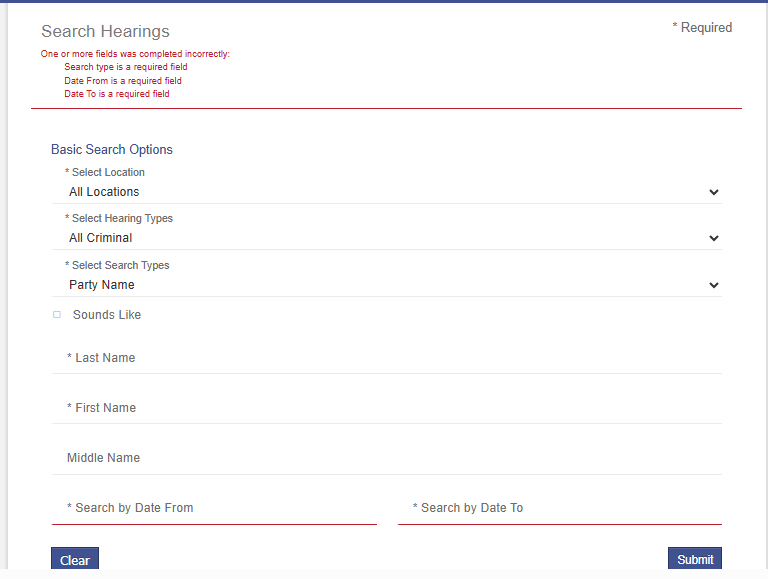
Users should start by visiting the official Smith County judicial records website. The “Search Hearings” page contains public hearing search tools used for criminal and magistrate-related hearing lookup. This system works on desktop and mobile devices and allows public searches using names, case numbers, and hearing dates.
Select the Hearing Type
Inside the search form, users must choose the correct hearing category before searching records. Under “Select Hearing Types,” the correct option for magistrate-related records is “All Criminal.” Civil hearing searches usually return unrelated court matters and hearing schedules.
- Select Hearing Types
- Choose “All Criminal”
- Leave civil options unselected
Choose a Search Method
The portal contains several search methods for finding court hearings and magistrate-related records. Most users search by defendant name or exact case number. These options appear inside the “Select Search Types” dropdown menu on the hearing search page.
Available search options include:
- Case Number
- Party Name
- Business Name
- Attorney Name
- Attorney Bar Number
- Judicial Officer
- Courtroom
Search by Party Name
The “Party Name” option searches hearing records connected to a defendant or involved party. After selecting this option, the system opens fields for last name, first name, and middle name. Users should enter correct spelling for better search accuracy.
Required fields include:
- Last Name
- First Name
Optional field:
- Middle Name
The “Sounds Like” checkbox helps return similar spelling matches.
Search by Case Number
The “Case Number” option gives direct search results when the exact court case number is available. This method often produces faster and more accurate hearing lookup results than name searches, especially for active criminal hearings and scheduled magistrate appearances.
Users should:
- Select “Case Number”
- Enter the full case number
- Submit the hearing search
Enter the Required Date Range
The Smith County hearing portal requires users to enter hearing dates before running a search. Both date fields are mandatory and help narrow hearing results inside the public judicial records database.
Required date fields:
- Search by Date From
- Search by Date To
Example:
- From: 01/01/2025
- To: 12/31/2025
Submit the Court Search
After completing all required search fields, users should press the “Submit” button located at the bottom of the form. The system then searches public hearing records connected to criminal court activity and magistrate-related proceedings.
Before submitting, verify:
- Hearing Type = All Criminal
- Search Type selected
- Name or case number entered
- Date range completed
Review Hearing Search Results
The hearing lookup system displays matching court records after the search completes. Search results usually contain hearing schedules, courtroom information, defendant names, and court activity details connected to criminal or magistrate matters.
Search results may include:
- Defendant name
- Case number
- Hearing date
- Courtroom
- Judicial officer
- Criminal hearing details
- Court appearance status
Smith County Preliminary Hearings
Preliminary hearings are early criminal court proceedings held after an arrest or criminal complaint filing. In Smith County, these hearings help the court review whether enough evidence exists for a felony case to continue through the criminal justice process. The hearing usually happens before a trial begins and focuses on evidence review rather than guilt or innocence. Prosecutors present basic facts connected to the alleged offense, and the judge examines the information before deciding if the criminal case should proceed to later court stages.
Purpose of Preliminary Hearings
The purpose of preliminary hearings is to determine whether probable cause supports the criminal charges filed against a defendant. This felony screening hearing protects defendants from facing trial without enough supporting evidence. The court examines police reports, arrest details, criminal complaint records, and witness testimony before making a decision. Preliminary hearings help prosecutors present early evidence connected to the allegations and allow defense attorneys to review the prosecution’s claims. This court examination stage often shapes how the criminal case moves through future hearings and trial preparation.
Key functions include:
- Reviewing probable cause
- Examining criminal complaint records
- Hearing witness testimony
- Screening felony charges
- Evaluating early prosecution evidence
Evidence Review Process During Hearings
During preliminary hearings, prosecutors present evidence tied to the alleged criminal offense. The court reviews evidence summaries, witness testimony, police statements, and investigative records connected to the criminal complaint. Law enforcement officers may testify about arrests, collected evidence, or observed events linked to the case. Defense attorneys can question witnesses and challenge parts of the prosecution’s evidence during the hearing. The judge studies the presented information carefully before deciding whether probable cause exists for the criminal charges to continue through the court process.
Evidence may include:
- Police reports
- Arrest affidavits
- Witness testimony
- Surveillance footage
- Evidence summaries
- Criminal complaint documents
Judge Decisions After Court Examination
After reviewing the prosecution’s evidence and witness testimony, the judge decides whether the case contains enough support for further criminal proceedings. The court does not decide guilt during preliminary hearings. Instead, the judge focuses on probable cause and whether the evidence supports continued prosecution. If the court finds enough evidence, the criminal case moves forward into later court stages. The judge may reduce charges, dismiss unsupported allegations, review bond conditions, or schedule additional hearings connected to the criminal proceedings.
Possible court decisions include:
- Sending the case forward
- Dismissing weak charges
- Lowering criminal charges
- Scheduling future hearings
- Reviewing bond conditions
How Criminal Cases Progress After Preliminary Hearings
If probable cause exists, the criminal case continues through the court system for arraignment, plea hearings, motions, or trial preparation within the Smith County Court process. Felony cases often move into district court after preliminary hearings conclude. Prosecutors may continue evidence collection, negotiate plea agreements, or prepare witnesses for future proceedings. Defense attorneys may file motions challenging evidence or requesting case dismissal before trial begins. Preliminary hearings remain an important court examination stage since they help determine whether criminal charges contain enough evidence for continued prosecution within Smith County courts.
Misdemeanor Cases in Smith County Magistrate Court
Misdemeanor cases involve lower-level criminal charges that carry lighter penalties than felony offenses. In Smith County Magistrate Court, these cases often include criminal citations, petty offenses, traffic-related violations, and other minor criminal offenses handled through early court proceedings and scheduled hearings. The court manages arraignments, bond reviews, preliminary appearances, and hearing schedules connected to misdemeanor charges. Many county criminal records tied to misdemeanor cases remain available through public judicial record systems, allowing residents to review hearing dates, case status, and related court activity online.
How Smith County Handles Misdemeanor Cases
Smith County Magistrate Court processes misdemeanor cases through several early criminal court stages after an arrest, citation, or criminal complaint filing. Defendants may receive a summons, citation notice, or arrest order requiring a court appearance. During the first hearing, the judge reviews the charges, explains legal rights, and may discuss bond conditions or future hearing dates. Prosecutors and defense attorneys may negotiate plea agreements before trial scheduling begins. Some lower-level charges resolve quickly through fines, probation agreements, or dismissed charges depending on the available evidence and case circumstances.
The court process may include:
- Arrest or citation issuance
- Initial court appearance
- Bond review hearing
- Plea discussions
- Trial scheduling
- Sentencing hearings
Misdemeanor Examples
Smith County courts handle many types of misdemeanor cases connected to public safety, property crimes, and lower-level criminal violations. These offenses usually involve smaller penalties than felony crimes but may still lead to fines, probation, license suspension, or jail time depending on the circumstances and criminal history.
Common misdemeanor offenses include:
- DUI or impaired driving
- Shoplifting and retail theft
- Disorderly conduct
- Simple assault
- Traffic violations
- Public intoxication
- Trespassing offenses
- Criminal citations
Penalties for Lower-Level Charges
Penalties for misdemeanor cases depend on the seriousness of the offense, prior criminal history, and court findings. Judges may impose financial penalties, probation conditions, community service, or short jail sentences for certain lower-level charges. Traffic violations and criminal citations may result in fines, license points, or mandatory court programs. Repeat offenses often carry stronger penalties and stricter probation terms. Some misdemeanor convictions may remain part of county criminal records and appear during background screenings or public judicial record searches conducted through official court databases.
Possible penalties may include:
- Court fines
- Probation supervision
- Community service
- Driver license suspension
- Mandatory treatment programs
- Short-term jail sentences
Court Appearance Requirements and Public Records
Defendants charged with misdemeanor cases must attend scheduled court appearances unless the court grants another arrangement. Missing a required hearing may lead to bench warrants, added penalties, or license restrictions depending on the case type. Court appearance dates usually appear inside the county hearing lookup system and public judicial records portal. Many Smith County misdemeanor records remain available through online court databases, allowing public searches for hearing schedules, criminal citations, court activity, and lower-level criminal offenses connected to active or closed cases.
Smith County Warrants and Bond Hearings
Smith County courts handle warrants and bond hearings during the early stages of criminal proceedings after arrests, criminal complaints, or missed court appearances. Warrants give law enforcement officers legal authority to arrest or detain a person connected to an active criminal matter. Bond hearings take place shortly after detention and help judges decide whether a defendant may leave custody before future court appearances. These proceedings play an important role in criminal custody records, detention review, and release procedures connected to local criminal cases.
Arrest Warrants and Bench Warrants
Arrest warrants are issued after judges review evidence presented by law enforcement officers or prosecutors supporting alleged criminal activity. Bench warrants usually occur after a defendant misses a required court appearance, violates release conditions, or fails to follow a court order. Once approved, warrants become active inside county criminal records and may appear during public court searches. Law enforcement officers may arrest defendants during traffic stops, workplace encounters, or other police interactions connected to active warrant records. Smith County warrant records may contain information such as defendant names, criminal allegations, warrant status, hearing dates, and related court activity. Some warrant records remain publicly searchable through online judicial record systems depending on court restrictions and local record policies.
Can You Search Active Warrants?
Many active warrant records can be searched through public judicial record systems and county hearing lookup tools. Users often perform an active warrant search by entering defendant names, case numbers, or hearing information into the online court database. Search results may display warrant status, court appearance schedules, criminal charges, and related arrest records connected to the case. Restricted investigations, sealed matters, or juvenile cases may remain unavailable inside public search systems under court privacy rules. People searching criminal custody records often review hearing schedules and warrant activity before appearing in court or arranging legal representation. Court staff and defense attorneys may provide additional information about active warrants, release conditions, or upcoming detention hearings connected to pending criminal matters.
How Bond Hearings Work
Bond hearings usually occur shortly after arrest and detention. During these hearings, judges review criminal charges, arrest details, prior criminal history, and public safety concerns before deciding whether a defendant may leave custody before trial. Prosecutors may request higher bail amounts for serious charges or repeat offenses, while defense attorneys may request lower bail or supervised release based on the defendant’s background and court history. The court examines factors such as flight risk, employment status, prior court appearances, and community safety concerns during the bail review process. Some defendants receive personal recognizance release, while others may need to post cash bail or secure a surety bond before release from custody.
Bail Determination and Custody Release Procedures
After reviewing evidence and detention details, the judge determines the bail amount and release conditions connected to the criminal case. Release conditions may require defendants to attend all future court appearances, avoid contact with certain people, complete drug testing, or follow travel restrictions during the pending case. Defendants who fail to follow release conditions may face bond revocation, additional warrants, or new criminal penalties. Some defendants remain in custody after bond hearings if the court considers them a significant flight risk or danger to public safety. Bail decisions and detention hearing outcomes often become part of public criminal custody records and may appear through county judicial record systems or hearing lookup databases.
Public Access Rules for Magistrate Court Records
Public court records in Smith County allow residents to review many types of judicial information connected to criminal proceedings, hearing schedules, citations, and court activity. Open judicial records help maintain transparency within the local court system and allow public review of many legal proceedings handled through magistrate court operations. Public record systems may display hearing dates, filing details, defendant names, case numbers, warrant activity, and bond information connected to active or closed criminal matters. Many public court records remain searchable through courthouse terminals, county clerk offices, and online judicial record databases.
Public Records and Restricted Court Files
Many magistrate court records remain publicly available under state records access laws and county judicial policies. Public court records often include hearing schedules, criminal filings, lower-level charges, warrant activity, and court appearance details connected to local criminal proceedings. Some court files may contain downloadable hearing summaries or filing records through online court databases. Restricted court files receive privacy protection under court rules when records contain sensitive information, protected witness details, confidential investigations, or sealed evidence connected to ongoing legal matters and criminal proceedings.
Publicly available records may include:
- Hearing schedules
- Criminal case numbers
- Court appearance details
- Warrant activity
- Bond information
- Filing dates
Confidential Filings and Juvenile Restrictions
Confidential filings receive stronger legal protection under court privacy regulations and state judicial rules. Juvenile records usually remain unavailable to public searches since courts protect minors involved in criminal, family, or protective proceedings. Certain mental health matters, family violence filings, victim protection records, and sensitive investigations may receive similar confidentiality treatment inside judicial record systems. Courts may remove personal information before releasing public court records through online databases or courthouse requests. Protected information may include financial records, addresses, identification numbers, medical details, and confidential witness information.
Sealed Cases and Court Privacy Regulations
Sealed documents and sealed court cases remain hidden from normal public searches after judges approve sealing requests connected to privacy or legal concerns. Once sealed, these records usually disappear from online court databases and courthouse public access systems. Court privacy regulations control how judicial records appear online and determine which filings remain restricted from public viewing. Smith County courts follow records access laws that balance public transparency with privacy protections connected to criminal proceedings, confidential filings, protected investigations, and sensitive legal matters handled within the judicial system.
Restricted or sealed records may include:
- Juvenile court files
- Confidential filings
- Protected victim information
- Mental health proceedings
- Sealed documents
- Sensitive investigations
How to Request Copies of Magistrate Court Records
Smith County court record copies are usually requested through the Smith County Clerk of court Office or the Records Division connected to the criminal courts. Requesters normally need the defendant name, case number, filing date, or hearing information before staff can locate the correct magistrate court file. Public court records may include criminal complaints, hearing documents, bond records, warrants, and court appearance records. Some sealed documents, juvenile files, and confidential filings remain unavailable under court privacy regulations and records access laws.
Online and In-Person Record Requests
Public court records may be viewed through the county judicial records system, though many official copies still require direct clerk processing. In-person requests remain the most reliable option for certified judicial documents, older archived records, or complete case files connected to magistrate proceedings. Court staff may ask for photo identification before releasing certain records. Requesters may receive same-day copies for simple public records, depending on courthouse workload and file availability.
Common request methods include:
- Public records counter requests
- Written public records request forms
- Criminal records department requests
- Certified copy requests through the clerk office
Certified Copy Fees and Standard Charges
Smith County copy fees may vary slightly depending on document type, certification requirements, and total page count. Standard non-certified copies usually cost around $1.00 per page for courthouse printing requests. Certified judicial documents often include an added certification fee of approximately $5.00 per document, plus copy charges. Some archived records may involve additional retrieval costs if files are stored offsite or inside older court archives.
Typical Court Record Fees
| Record Service | Estimated Fee |
|---|---|
| Standard Copy | About $1 per page |
| Certified Copy | About $5 certification fee plus copy cost |
| Archive Retrieval | Additional fee may apply |
| Record Search by Clerk | Possible administrative fee |
Fees may change depending on county policy updates and court administration rules.
Processing Time for Court Record Copies
Processing time depends on record availability, courthouse workload, and whether the requested file requires certification or archive retrieval. Basic public court records may be available the same business day during normal courthouse hours. Certified judicial documents often require one to three business days for clerk review and official certification. Older archived files or restricted record reviews may take longer before release approval is completed through court clerk services.
Factors affecting processing time include:
- Certification requirements
- Archived file retrieval
- Court workload
- Restricted record review
- Public records request volume
Smith County Magistrate Court Location and Contact Information
The Smith County magistrate court functions are handled through the Justice of the Peace courts and court offices inside the main county courthouse in Tyler, Texas. Most criminal hearings, warrants, magistrate warnings, and court clerk services take place at the central courthouse building used by several Smith County judicial offices.
Main Magistrate Court Address
The primary courthouse tied to magistrate duties is located inside Smith County Courthouse in downtown Tyler. This county court building sits near other local government offices, making it easy for visitors to locate public judicial services.
Physical Courthouse Address
100 N. Broadway, Room 209
Tyler, TX 75702
County Mailing Address
200 E. Ferguson Street
Tyler, TX 75702
Main Phone Number
(903) 590-1653
General Office Hours
Monday through Friday: 8:00 AM – 5:00 PM
The courthouse stands close to the Smith County Annex buildings and several public service departments in central Tyler. Drivers entering downtown Tyler can reach the judicial office location from West Ferguson Street or North Broadway Avenue. Public signs around the courthouse square help visitors locate the court clerk office and courtroom entrances.
Frequently Asked Questions
Many residents search Smith County magistrate court records for hearing schedules, warrants, bond hearings, misdemeanor cases, and criminal filing information. The following frequently asked questions explain how the public court system works, what records remain searchable, and how magistrate case records appear inside county judicial databases and hearing lookup systems.
How do I search Smith County magistrate court records online?
Smith County magistrate court records can be searched through the county judicial records and hearing lookup system. Users normally search by defendant name, case number, citation number, or hearing date connected to criminal proceedings. Most magistrate-related hearings appear under criminal hearing searches inside the public court database. Search results may include hearing schedules, warrant information, bond hearings, criminal filings, and local court activity connected to active or closed magistrate case records.
Are magistrate court records public?
Many magistrate case records remain public under state judicial access laws and county court policies. Public court records often include hearing schedules, criminal filings, warrants, misdemeanor cases, and bond hearing information connected to local criminal proceedings. Some records remain restricted from public searches, including juvenile matters, sealed cases, confidential filings, and protected investigations. Court privacy regulations control which records appear online and which judicial documents remain unavailable through public search systems.
Can I search active warrants online?
Many active warrants can be searched through county hearing lookup systems and public judicial record databases. Users often search by defendant name or case number to review warrant status, hearing dates, arrest records, and related criminal charges. Some restricted investigations or sealed criminal matters may not appear in public searches. People checking active warrant records often review upcoming hearings, detention information, and bond hearing schedules connected to pending criminal proceedings within Smith County courts.
What happens during a bond hearing?
Bond hearings take place shortly after arrest or criminal detention. During these hearings, judges review criminal charges, public safety concerns, prior criminal history, and flight risk information before deciding whether a defendant may leave custody before trial. Prosecutors may request higher bail amounts for serious offenses, while defense attorneys may request lower bond conditions or supervised release. Judges may impose release conditions requiring court appearances, monitoring programs, or travel restrictions connected to the criminal case.
Are misdemeanor cases searchable?
Many misdemeanor cases remain searchable through public court databases and county hearing systems. Search results may include criminal citations, hearing dates, court appearance schedules, lower-level charges, and bond hearing details connected to misdemeanor proceedings. Common searchable offenses may include DUI charges, disorderly conduct, traffic violations, simple assault, and shoplifting cases. Some misdemeanor records may contain limited information depending on court privacy restrictions, sealed filings, or ongoing criminal investigations connected to the case.