Smith County probate court records provide detailed documentation of wills, estate administration, guardianship matters, and related filings within the county court system. These records support research into inheritance cases and legal proceedings tied to deceased estates. Users can review case details, filing dates, and court actions recorded by probate offices. The information assists attorneys, researchers, and family members seeking case history or legal status updates across different probate matters handled by Smith County courts. Records also reflect filings submitted during estate settlement processes.
Smith County probate court records include estate case files, wills, guardianship petitions, and probate filings recorded through county judicial offices. These documents outline how estates are managed, distributed, and reviewed under court supervision. Case information often contains party names, hearing entries, and filing histories linked to inheritance matters. Legal professionals and family members review these records for case status checks, historical estate details, and procedural updates maintained within Smith County probate court systems. They support accurate record tracking across probate matters.
How to Search Smith County Probate Court Records Online
Smith County probate court records can be searched online through the county’s official public portal and judicial record systems. Users can review probate case details, estate filings, guardianship matters, and will-related records through the Smith County Court public access system by using the Smart Search tool available through the county portal. Probate indexes are available online through Smith County, though some document images may still require clerk office requests.
Official Probate Search Portal
Smith County uses an online court record lookup system that allows public probate case searches through the Smart Search feature.
Official portal: https://portal.smith-county.com/Public/Home/Dashboard/29
The county states that probate, civil, and criminal records are managed through the judiciary system, with searchable indexes available online.
Open the Smith County Public Portal
Start by opening the official public search portal.
On the homepage, three search tools appear:
| Portal Tool | Purpose |
|---|
| Search Hearings | Court hearing schedules |
| Smart Search | Court case and probate records |
| Jail Search | Jail and inmate records |
For probate records lookup online, users must select Smart Search. This is the main online probate database used for estate and probate case lookup.
Click “Smart Search”
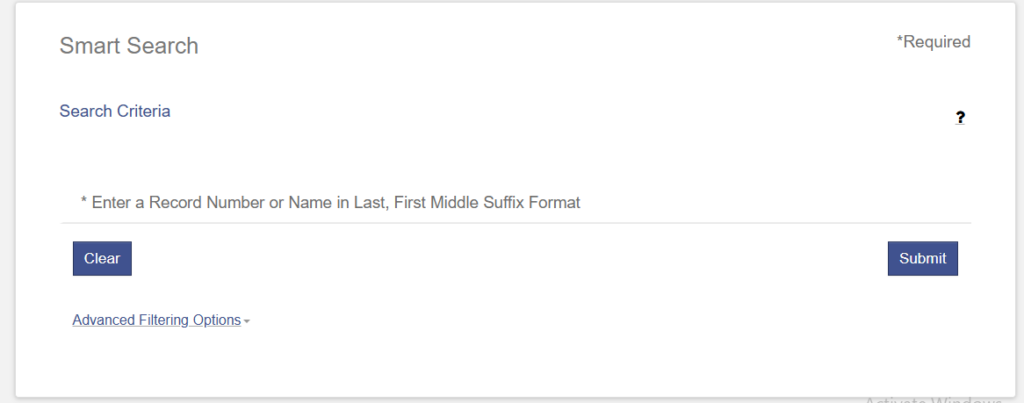
After selecting Smart Search, the court record lookup system opens a search screen.
This tool supports searches for:
- Probate case files
- Estate administration matters
- Guardianship proceedings
- Will probate records
- Court docket information
The portal works as a digital court records platform for multiple Smith County court divisions. Probate users should focus only on estate-related filings.
Enter Search Information
The search page includes several searchable fields.
Users may search using:
- Full legal name
- Estate representative name
- Probate case number
- Attorney name
- Filing date range
Example Searches
- Estate of Robert Davis
- Mary Johnson
- PR-2025-00124
A probate case number usually produces faster and more accurate results than a general name search.
Smith County online probate case search systems may return multiple records if common names are entered.
Filter Probate Results
After entering search details, the system may display several matching records. Filters help narrow the results.
Available filters often include:
- Case Type — Probate / Estate
- Filing Year — Limits search period
- Status — Open or closed cases
- Court Division — Probate court selection
Filtering improves digital estate records access and reduces unrelated search results.
Open the Probate Case File
Clicking a case result opens the detailed probate case page.
Users may view:
- Case number
- Filing date
- Party names
- Estate category
- Court events
- Hearing entries
- Probate status updates
- Filed documents list
Many recent Smith County probate records are available at the docket level through online systems.
Review Available Documents
Some probate records include downloadable files or scanned court documents.
Available documents may include:
- Wills
- Letters testamentary
- Guardianship filings
- Estate inventories
- Court orders
Smith County states that online indexes are available, though some images remain viewable only through the County Clerk’s office.
Request Certified Copies
If a document cannot be viewed online, users may contact the Probate Division for copies.
The Probate Clerk handles:
- Certified probate copies
- Estate filing requests
- Guardianship document requests
- Will copy requests
Types of Probate Records Available in Smith County
Smith County probate records include multiple categories of estate court records that document how assets, wills, and legal responsibilities are handled after death. These records support estate settlement records, inheritance documentation, and guardianship matters processed through the court system. In some cases, related legal matters may also connect with the family court when guardianship or dependent care issues overlap with probate proceedings. Each record type provides legal details about filing history, court actions, and case outcomes. Users often review these files for legal reference, family estate tracking, and court verification purposes related to probate inheritance documentation and estate administration files.
Wills and Testament Records
Wills and testament records in Smith County show how a deceased person directed the distribution of assets through legally filed documents. These probate records include original wills, codicils, and court validation entries confirming authenticity. During will probate filings, the court reviews signatures, witnesses, and legal compliance before approval. Once validated, these documents become part of official estate court records and support estate settlement records for final asset distribution among heirs or beneficiaries based on legal instructions recorded in the filing process.
- Original will documents and codicils
- Executor appointment records
- Court validation and approval notes
Estate Administration Cases
Estate administration cases cover court-managed handling of estates when no will exists or when an appointed executor oversees asset distribution. These probate records include detailed filings on debts, assets, and property management under court supervision. Smith County estate court records track each step from appointment of administrators to final distribution reports. These files form a key part of probate inheritance documentation, showing how estates are resolved legally through structured court procedures and verified estate settlement records over time.
- Asset and debt inventories
- Administrator appointment orders
- Final estate distribution reports
Guardianship Records
Guardianship records in Smith County involve court decisions where a guardian is appointed to manage care or finances for minors or individuals unable to act independently. These probate records include petitions, court evaluations, and ongoing supervision reports filed under guardianship cases. Estate court records in this category focus on welfare protection and financial management under legal authority. These filings remain active throughout the guardianship period and are reviewed periodically to confirm proper care and compliance with court directions.
- Guardian appointment orders
- Court evaluation reports
- Financial supervision updates
Inheritance Disputes and Claims
Inheritance disputes and claims arise when family members or interested parties challenge wills or estate distribution decisions. These probate records include petitions, objections, and court hearings recorded in Smith County estate court records. Judges review evidence, witness statements, and legal arguments before issuing rulings. These files form part of probate inheritance documentation and often impact estate settlement records by determining rightful beneficiaries. Court decisions in these cases finalize asset distribution and resolve conflicts between involved parties under probate law.
How to Request Certified Probate Records
Smith County probate record request services are handled by the Smith County Clerk – Probate Division. Certified estate documents are official copies stamped and sealed by the clerk, used for legal matters like inheritance, banking, and court proceedings. A probate record request can be submitted online, by mail, or in person depending on convenience and document type.
Online Request (Digital Court System)
Smith County provides limited online probate case details through its court records system. However, certified copies are not fully downloadable online and must be formally requested.
Steps:
- Visit the official Smith County Clerk portal
- Use the public records / case search system for case details
- Identify probate case number or party name
- Submit a formal request for certified estate documents
- Pay required fees online if the option is available
Online tools mainly show docket-level data (case status, filings, hearings), not full certified documents.
In-Person Request (Fastest Method)
The most reliable method for certified estate documents is visiting the County Clerk office in Tyler, Texas.
Office details:
- Smith County Clerk – Probate Division
- 200 E. Ferguson St., Suite 300, Tyler, TX 75702
- Phone: (903) 590-4678 (Probate Division)
Steps:
- Bring case number or full name of deceased person
- Request certified probate record copies at the counter
- Provide valid photo ID if required
- Pay copy + certification fees
- Receive certified documents (often same day for simple requests)
This method is commonly used for estate settlement records and urgent legal needs.
Mail Request (For Remote Users)
Users can request certified estate documents by mail if they cannot visit in person.
Steps:
- Write a request letter with:
- Case name and number
- Type of probate record needed
- Include copy fee + certification fee
- Add return mailing address
- Send request to Smith County Clerk Probate Division
Processing time:
- Usually 7 to 14 business days, depending on workload and mail delivery.
Fees and Costs (Accurate General Range)
Based on Texas county clerk fee structure:
- Standard copies: around $0.10 per page
- Certification fee: usually $5 per document
- Additional charges may apply for large files or research time
- Payment accepted: cash, check, money order, or card (in-person)
(Source: Smith County Clerk fee schedule and Texas public records fee rules)
Who Can Request Certified Probate Records?
Smith County follows Texas public records law, meaning many probate records are open to the public. However, certified copies are often requested by parties with legal interest.
Eligible requesters include:
- Executors of estates
- Heirs or family members
- Attorneys handling probate matters
- General public (for non-restricted records)
Some sensitive records (sealed guardianship or restricted filings) may require additional authorization or court approval.
Smith County Probate Court Location
The Smith County probate matters are handled inside the main county courthouse in Tyler, Texas. There is no separate standalone probate building. All probate filings, estate cases, and guardianship matters go through the county court system and clerk office located in the courthouse.
Main courthouse address:
- Smith County Courthouse
- 100 N. Broadway Avenue
- Tyler, TX 75702
- United States
This is the primary judicial building for probate records and estate court services in Smith County.
Where probate work is handled inside the building
Probate cases are processed through two main offices inside the courthouse:
- County Court at Law No. 3 (Probate jurisdiction)
- Smith County Clerk – Probate Division
These offices handle all estate-related legal work, including wills, inheritance matters, and guardianship cases. So when people search “probate court near me” or “estate court office Smith County,” they are actually referring to this courthouse system in downtown Tyler.
Visiting information
- Working hours: Monday–Friday, around 8:00 AM to 5:00 PM (may vary by office)
- Security check: Required at courthouse entrance
- ID requirement: Often needed for certified copies or file requests
- Public service: Walk-in support available at clerk counters
Frequently Asked Questions
Smith County probate court records often raise common questions from users searching for estate information, wills, and inheritance filings. These probate records FAQ answers help clarify how estate court questions are handled, what is public, and how probate search help works through official systems. The following responses provide clear details about accessing probate records, checking wills, and obtaining certified documents through Smith County court services.
How do I find Smith County probate court records online?
Smith County probate court records can be found through the county clerk’s online case search system. Users can perform a probate search help request by entering a party name or case number into the public records portal. The system shows basic case details such as filings, hearings, and case status. However, full documents may not always be available online. For complete estate court questions, users may need to request records directly from the clerk office.
Are probate records public in Smith County?
Most probate records in Smith County are public under Texas law. Estate court records such as wills filed for probate, guardianship cases, and administration filings are generally open for review. However, some restricted files, such as sealed guardianship or sensitive estate matters, may not be publicly available. Probate records FAQ guidance confirms that public access depends on case type and court restrictions applied by the judge or clerk.
Can I search wills and estate records online?
Yes, wills and estate records can often be searched online through the Smith County probate court system. The online portal allows users to view basic probate filings and estate court questions related to case status. A probate search help tool may provide names, filing dates, and case numbers linked to wills. However, actual scanned wills or certified estate documents usually require a formal request through the County Clerk’s office.
How long does probate take in Smith County?
Probate timelines in Smith County vary based on estate complexity. Simple cases with valid wills may take a few months to complete, while disputed or large estates can take a year or longer. Estate court records show multiple stages, including filing, hearings, and final distribution. Probate records FAQ sources confirm that delays often occur due to legal disputes, missing documents, or court scheduling in inheritance records FAQ processes.
Can I get certified copies of probate records?
Yes, certified copies of probate records are available through the Smith County Clerk’s office. These documents include official seals and legal certification for court or financial use. Users requesting probate records FAQ copies must submit a formal request online, by mail, or in person. Fees apply per page and for certification. Estate court questions involving legal use often require these certified versions rather than basic online copies from the probate search system.