Smith County traffic citation services handle a wide range of violations issued by local law enforcement on county roads and highways. Residents dealing with speeding tickets, signal violations, or other traffic offenses can find case information, payment options, and hearing schedules through the local court system. The process covers fines, case status updates, and court appearances for contested matters. This system helps drivers resolve traffic matters linked to road safety rules across the county area. Online payment and hearing options support quick case resolution within local jurisdiction.
Smith County traffic court handles proceedings for drivers issued citations across county roadways, focusing on resolution of moving violations and related penalties. The court processes contested tickets, scheduled hearings, and case reviews for different traffic offenses. Drivers can review citation details, court dates, and possible outcomes linked to each case. Local procedures cover fine assessment, administrative steps, and record updates tied to traffic violations within county jurisdiction. Public access points allow review of traffic records and payment status online. Case updates appear through official channels.
How to Search Traffic Tickets in Smith County
Smith County traffic citation lookup allows users to confirm ticket details through a structured online court records system. The process supports traffic ticket search, citation lookup, and case status check using official databases. The system pulls data from local Justice of the Peace courts and municipal courts connected with the Smith County Court system. It shows violation records, hearing dates, and payment details in one place.
Open the Official Citation Search
The first step is to access the official traffic citation search portal used by Smith County and related courts. This tool allows users to find traffic tickets directly using citation details or personal information. It is designed for quick and accurate lookup of court-issued traffic violations.
Search URL : https://www.municipalonlinepayments.com/tylertx/court/search
- Works for Tyler/Smith County traffic citations
- Provides direct ticket lookup system
- No login required for basic search
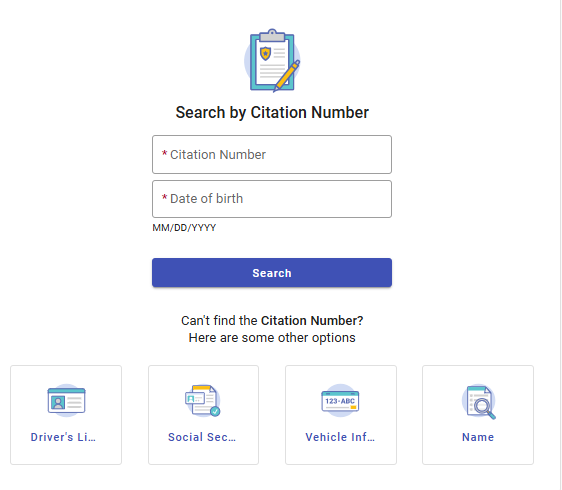
Enter Citation Number and Date of Birth
After opening the tool, users must enter their citation number and date of birth. These two fields help the system match the exact traffic ticket record. This is the most accurate method because it directly pulls data from the court database linked to the issued violation.
- Citation number is found on your ticket
- Date of birth must be in MM/DD/YYYY format
- Gives fastest and most accurate results
Use Alternative Search Options
If the citation number is not available, the tool provides alternative search methods. Users can search using their driver’s license, name, vehicle details, or other identifying information. This helps locate traffic tickets even when physical documents are missing or incomplete.
- Driver license number search option
- Vehicle information lookup available
- Name-based search supported
View Your Traffic Ticket Details
Once the search is completed, the system displays full ticket details. This includes violation type, case status, court name, fine amount, and due date. Users can review all information to understand their traffic case and next legal steps clearly.
- Shows violation type (speeding, signal violation, etc.)
- Displays fine amount and due date
- Shows case status (active or closed)
Download or Print Your Record
After reviewing the ticket, users can download or print the record for personal use or court submission. This feature is helpful for legal records, payment proof, or keeping a personal copy of the traffic violation case history.
- Printable court record available
- PDF download option supported
- Useful for legal documentation
How Smith County Traffic Ticket Works
A Smith County traffic ticket is entered into the court system after a law enforcement officer issues a citation on the road. Once recorded, it becomes part of official citation records that can be checked through a traffic ticket search or traffic ticket lookup. These records help track violations, fines, and court updates in one place. In some situations, related matters may also be reviewed through the Probate Court system when legal or estate-related issues connect to an active case. The system links each ticket to a unique identifier so the case can be tracked through multiple search methods.
How Traffic Ticket Records Are Created in Smith County
Traffic ticket records in Smith County are created when an officer issues a citation and submits it to the court system for processing. The data is stored in an online court database, where it becomes part of permanent citation records. Each entry includes key case details such as violation type, defendant information, and case status. This structured setup allows easy retrieval through case number search or related identifiers for accurate record matching.
Key record elements:
- Citation ID lookup reference
- Defendant and vehicle details
- Court date and violation code
- Case number search entry
Ways to Perform a Traffic Ticket Search
A traffic ticket search in Smith County can be performed using several different methods depending on the available information. Users can search through defendant details, citation numbers, or case identifiers within the court system. The traffic ticket lookup process is designed to support multiple entry points so users can find records even with partial data. This flexibility helps locate accurate results quickly, especially when dealing with older or incomplete citation records.
Common search methods:
- Defendant search using full name
- Citation ID lookup for exact match
- Case number search for court records
- License plate search (if available)
Traffic Ticket Search & Court Record Lookup
A dedicated traffic ticket lookup tool allows users to check Smith County citation records through a simplified interface. It connects directly with structured court data and supports multiple search inputs such as citation numbers, driver names, and license plates where available. This tool reduces manual searching and improves accuracy when checking traffic violations. It also helps users confirm case details, court status, and related citation records without delays or confusion in the lookup process.
What Information Appears in Ticket Records
Traffic ticket records in Smith County show detailed case information that comes directly from court filings and law enforcement reports. These records include violation type, citation number, and court scheduling details. A traffic ticket lookup provides access to this structured data, helping users confirm case progress and payment status. Since each entry is tied to official citation records, it provides reliable information for verification, legal tracking, and personal record checking.
Typical record details:
- Citation number and issue date
- Violation description and code
- Court hearing date and location
- Payment or penalty status
- Case progress updates
Why Traffic Ticket Lookup Is Important
A traffic ticket lookup in Smith County helps drivers stay informed about active or past violations recorded in court systems. It reduces the risk of missing deadlines and helps users track fines or required actions linked to citation records. The ability to perform a quick traffic ticket search also supports better case management, especially when multiple tickets exist. Accurate tracking through official databases helps avoid unnecessary penalties or legal complications.
Types of Traffic Violations in Smith County
Traffic violations in Smith County include different categories of offenses that range from minor infractions to serious driving offenses. Each violation is recorded in official systems and may involve fines, court hearings, or penalties depending on severity. Many cases go through the speeding ticket court, especially when drivers contest charges or face repeated violations. These offenses are classified as moving or non-moving violations and are processed through local law enforcement and court records for proper legal handling.
Speeding Violations
Speeding violations are one of the most common traffic violations in Smith County and usually fall under moving violations. These occur when a driver exceeds posted speed limits on highways, residential streets, or school zones. The penalty depends on how far the driver exceeded the limit and whether prior offenses exist. In many cases, drivers must respond through the speeding ticket court, where fines may be paid or the charge may be contested based on evidence. Speeding cases are taken seriously because they increase accident risk and affect road safety. Repeat violations can lead to higher fines and possible license penalties, especially in zones with strict enforcement rules.
DUI / DWI Related Offenses
DUI and DWI offenses are serious driving offenses involving alcohol or drug impairment while operating a vehicle. These cases are treated as criminal-level violations in Smith County and often require mandatory court appearances. Law enforcement handles these offenses strictly due to their impact on public safety. Penalties for DUI or DWI can include license suspension, heavy fines, mandatory education programs, and possible jail time depending on the severity of the case. These offenses are categorized as major vehicle infractions and are tracked through criminal court records rather than simple traffic ticket systems.
Red Light Violations
Red light violations occur when a driver enters an intersection after the traffic signal turns red. These moving violations are often detected through cameras or police observation in Smith County. They are considered moderate traffic violations but still carry financial penalties and possible points on a driving record.Drivers may receive a citation by mail or directly from law enforcement. In some cases, individuals may challenge the violation in court if they believe the evidence is inaccurate or unclear. These violations are closely monitored because they directly affect intersection safety.
Parking Tickets
Parking tickets are classified as non-moving vehicle infractions and are issued when a vehicle violates parking regulations. Common situations include parking in restricted areas, expired meters, or blocking access zones. Unlike moving violations, these tickets generally do not affect driving records but still require payment to avoid additional penalties. If unpaid, parking tickets can lead to increased fines or vehicle towing in Smith County. These violations are handled through administrative systems rather than formal court hearings, making them simpler but still important to resolve quickly.
License-Related Offenses
License-related offenses occur when a driver operates a vehicle without proper legal authorization. These driving offenses include driving with an expired license, a suspended license, or no valid permit. Smith County treats these violations seriously because they directly impact road safety and legal compliance. Such cases often require court appearances and may result in fines, extended suspension periods, or other legal consequences. These offenses are recorded in official traffic systems and remain part of driving history, affecting future eligibility to drive legally.
How to Pay Traffic Tickets in Smith County
Traffic ticket payment in Smith County is handled through the Justice of the Peace courts, where drivers can resolve court fines linked to traffic citations. A citation payment can be made before the court date or deadline listed on the ticket. The system allows multiple payment methods, including online services, in-person visits, and mail submissions. Each payment is processed through official court channels and recorded in the county system to update case status correctly.
Online Payment Methods
Online payments in Smith County are processed through approved court payment systems such as AllPaid or Certified Payments, depending on the precinct. A traffic ticket payment can be completed using a citation number or case reference. The system requires correct ticket details to match the record before payment is accepted. A small service fee is added to the total court fines, and payment confirmation is issued after completion.
- Payment is made through official court-approved portals
- Citation or case number is required
- Service fees apply on top of fines
- Payment confirmation updates court record automatically
In-Person Payment Option
In-person payment is accepted at the specific Justice of the Peace precinct office handling the case. Drivers can pay court fines directly using cash, cashier’s check, or money order. This method allows direct confirmation with court staff and helps resolve questions related to citation payment or case status. Once payment is completed, the court issues a receipt as official proof of settlement.
- Payment accepted at JP court office
- Cash, money order, or cashier’s check allowed
- Immediate receipt provided
- Staff assistance available for case questions
Mail-In Payment Option
Mail-in payment is accepted for drivers who prefer not to appear in person. A cashier’s check or money order must be sent to the correct Justice Court office along with citation details. This citation payment method requires accurate case information to avoid processing delays. Once received and processed, the court updates the traffic ticket payment status in the system and marks the fine as settled.
- Must include citation details with payment
- Cashier’s check or money order required
- Sent to correct JP court office
- Processing time depends on mail delivery
Payment Deadlines
Payment deadlines in Smith County are strictly defined on each traffic citation. Drivers must complete traffic ticket payment before the scheduled court appearance or due date. Missing the deadline may result in additional court fines, case escalation, or mandatory court appearance. The court treats payment deadlines as binding, and late submissions are recorded in the official system, which may affect the final outcome of the case.
Late Fee Consequences
Late payment of a traffic citation in Smith County can result in additional penalties under the court’s enforcement system. These may include increased court fines, administrative charges, or collection actions depending on case status. Failure to complete citation payment on time may also lead to license holds or further legal steps. In some cases, a warrant or enforcement action may be issued if the case remains unresolved for an extended period.
What Happens If You Don’t Pay a Traffic Ticket?
Failing to pay a traffic ticket in Smith County leads to serious consequences linked to unresolved traffic violations and unpaid court fines. Once the due date passes, the case moves into enforcement status within the court system. This may trigger added penalties, license actions, and legal follow-ups. The ticket remains active in official records until resolved. Over time, the total cost increases, and the issue may affect driving privileges and overall compliance history.
License Suspension Risk
When a traffic ticket is not paid, Smith County courts may report the case to the state licensing authority, which can lead to license suspension. This action usually follows missed deadlines related to traffic violations or ignored court notices. Once a license is suspended, driving becomes illegal until all court fines and reinstatement fees are fully paid. The system is strict because unpaid citations show non-compliance with legal requirements.
Key impacts include:
- License suspension after missed deadlines
- Driving becomes illegal during suspension
- Reinstatement requires full payment of fines
- Possible additional state fees for restoration
Additional Penalties
Unpaid tickets often lead to extra financial penalties under the court enforcement system. These charges increase the total amount owed and may include late fees, administrative costs, and rising court fines. As traffic violations remain unresolved, the case may also be sent to collections depending on duration and severity. This makes early payment important to avoid unnecessary financial pressure.
Common added penalties:
- Late payment fees
- Administrative processing charges
- Increased total court fines
- Possible collection agency involvement
Court Appearance Requirement
If payment is not made, the court may require a mandatory appearance before a judge. This usually happens when traffic violations are ignored or deadlines are missed. Failing to appear in court can make the situation worse, leading to additional penalties or a default judgment. In some cases, the court may increase court fines or issue further enforcement actions until the matter is resolved.
Possible outcomes:
- Mandatory court hearing notice
- Default judgment if ignored
- Increased fines or penalties
- Further legal enforcement actions
DMV Record Impact
Unpaid traffic tickets can also affect official DMV records, which track driving history and compliance status. When traffic violations remain open, they may be reported to the state system, resulting in points on the license record or driving restrictions. Insurance companies may also raise premiums based on unresolved violations. In some cases, license renewal or registration may be blocked until all court fines are cleared. This makes timely payment important for maintaining a clean driving record.
Can You Contest a Traffic Ticket in Smith County?
A traffic ticket in Smith County can be contested through the local traffic court if a driver believes the citation was issued incorrectly. The process allows individuals to challenge driving offenses by requesting a court hearing and presenting their case. This may involve reviewing citation records, submitting evidence, and choosing a legal response. Contesting a ticket does not guarantee dismissal, but it gives drivers a formal chance to dispute the charge before a judge.
Steps to Contest a Ticket
To contest a traffic ticket in Smith County, the driver must first notify the court before the deadline listed on the citation. This request places the case on the court docket for a hearing. The court then schedules a date where the defendant can appear and respond to the driving offenses listed in the ticket. During this stage, drivers may also select plea options such as guilty, not guilty, or no contest depending on their situation.
Basic steps include:
- Notify court before deadline
- Request a hearing in traffic court
- Choose a plea option
- Prepare supporting documents
Court Hearing Process
Once the case reaches court, a judge reviews the citation records and hears both sides. The officer who issued the ticket may present evidence, and the driver can respond with their defense. The hearing is structured and follows legal procedures to ensure fairness. Drivers may represent themselves or seek legal support depending on case complexity. The judge then evaluates the facts before making a decision on the driving offenses involved.
What happens in court:
- Judge reviews citation details
- Officer may present testimony
- Driver provides explanation or defense
- Legal rules applied to the case
Evidence Submission
Evidence plays an important role when contesting a traffic ticket. Drivers can submit photos, documents, or witness statements to support their case in traffic court. This evidence is used to challenge the accuracy of the citation records or question the circumstances of the alleged driving offenses. Proper documentation increases the chance of a favorable outcome, especially if there are errors or unclear details in the ticket.
Common evidence types:
- Photos or video footage
- Witness statements
- Vehicle or road condition proof
- Documents supporting defense
Possible Outcomes
After reviewing the case, the court may issue different outcomes based on evidence and testimony. The ticket may be dismissed if the judge finds insufficient proof of driving offenses. In some cases, fines may be reduced or modified through plea agreements. If the evidence supports the citation, the driver may be required to pay court fines or accept penalties. Each decision becomes part of official citation records and affects the final case status.
Possible results include:
- Ticket dismissal
- Reduced fines or penalties
- Guilty ruling with full payment required
- Modified plea agreement outcomes
Smith County Traffic Court Records & DMV Integration
Smith County traffic court records are closely connected with state DMV records, which store official driving history for each licensed driver. When a traffic case is resolved, the outcome is recorded in citation records and then transmitted to the state system. This integration ensures that all traffic violations are reflected accurately across court and DMV databases. Each update affects a driver’s record, including outcomes like convictions, dismissals, or paid citations.
How Court Records Update DMV
After a traffic case is finalized in Smith County traffic court, the court system sends the result to the state DMV records database. This includes information such as guilty findings, dismissed charges, or completed citation records after payment. The driver’s license number is used to match the case correctly. This process updates the state driving record points system so that every outcome is reflected in real time or within a short processing period.
Impact on Driving Record
Traffic court decisions directly influence a driver’s history through traffic violations and point-based tracking systems. When a driver is found responsible, driving record points may be added depending on the severity of the offense. These points remain on the record for a defined period and may affect driving privileges. Repeated violations can lead to stricter consequences, including license suspension or mandatory driving courses under state regulations.
| Violation Type | Possible DMV Impact | Record Effect |
|---|---|---|
| Minor traffic violations | Low or no points | Short-term record entry |
| Moving violations | Points added | Insurance risk increase |
| Serious offenses | Higher points | Possible license action |
| Repeated violations | Accumulated penalties | Suspension risk |
Insurance Implications
Insurance companies review DMV records to assess driver risk before setting premiums. When traffic violations appear in citation records, insurers may classify the driver as higher risk, leading to increased rates. Even a single violation can influence insurance costs depending on severity. Accumulated driving record points often result in long-term premium increases or policy adjustments. Keeping a clean driving history helps maintain stable insurance pricing and avoids unnecessary financial impact.
Smith County Traffic Court Locations & Contact Information
People searching for the main Smith County traffic court location can visit the Smith County Courthouse Annex in Tyler, Texas. This courthouse handles many traffic citation payments, court hearings, ticket records, and traffic violation matters connected to county-level cases.
Main Traffic Court Address
The Smith County Courthouse Annex serves as the primary courthouse for many traffic-related cases in Smith County. Residents often visit this location for citation payments, court appearance details, traffic ticket records, and paperwork related to traffic violations or driving offenses.
Smith County Courthouse Annex
200 E Ferguson St
Tyler, TX 75702
Phone: (903) 590-4605
Clerk Office Contact Information
Residents can contact the courthouse clerk office for traffic case updates, payment balances, hearing dates, or filing procedures. Court staff provide general case assistance and payment information, though they cannot provide legal advice or courtroom representation details.
- Phone: (903) 590-4605
- Location: 200 E Ferguson St, Tyler, TX 75702
- Office handles county traffic matters
- Bring citation number during visits
Frequently Asked Questions
Traffic-related questions in Smith County often focus on traffic ticket search, citation payment, court fines, and how violations affect driving records. These FAQs explain how the system works, what drivers should do, and what outcomes may occur if rules or deadlines are missed. Each answer reflects how traffic violations are handled through court and DMV systems.
How do I search Smith County traffic tickets online?
A traffic ticket search in Smith County is done through official court databases or approved online portals that display citation records. Users can enter a citation number, name, or case details to find active or past traffic violations. The system then shows case status, fines, and court dates linked to the record. Accurate details help return correct results, while incomplete information may show multiple possible matches tied to the same driver or case history.
Can I pay traffic fines online?
Yes, most citation payment options allow online processing through court-approved payment systems. Drivers can complete traffic ticket payment using a citation number or case reference. Payments are usually made with debit or credit cards, and the system updates court fines automatically once the transaction is approved. A receipt is issued for confirmation, and the case status is updated in official records shortly after successful payment.
How long do tickets stay on record?
Traffic tickets remain in citation records for a set period depending on the type and severity of traffic violations. Minor violations may stay on record for a shorter time, while serious offenses may remain longer in court and DMV systems. Even after payment, cases may still appear in historical records as closed or resolved. These records may be reviewed by insurance companies or state agencies when evaluating driving history.
Can traffic tickets affect my license?
Yes, unpaid or serious traffic violations can affect driving privileges. When violations are reported to the DMV, they may result in points on the license or restrictions. Accumulated issues or unpaid court fines can lead to suspension in severe cases. The impact depends on violation type and frequency. Each entry in citation records contributes to the overall driving history used by the state to determine license status.
What happens if I miss a court date?
Missing a court date in Smith County traffic court can lead to serious consequences. The court may issue a default judgment, increasing court fines and adding penalties for failure to appear. In some cases, enforcement actions such as warrants or license holds may be issued depending on the traffic violations involved. The case remains active in court records until resolved, and additional steps may be required to reopen or settle the matter.